HYROX Osaka 2027: Race, Hotels, Food & Japan Travel Guide
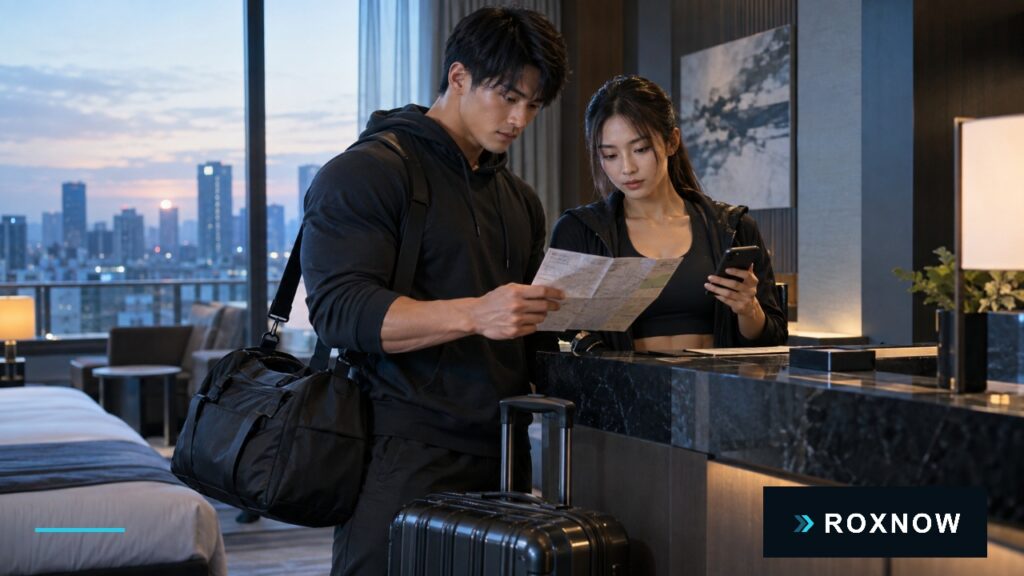
Coming to Japan for HYROX Osaka? Build the trip around your race, then give yourself time to enjoy the city. This English guide brings together the event essentials, airport and venue routes, places to stay, two- to seven-night itineraries, and a practical introduction to Japanese food. It is written for athletes travelling from overseas, including partners and families who are coming to support them.
1. HYROX Osaka 2027: race dates, venue and tickets
| Official event name | BYD HYROX Osaka |
|---|---|
| Event dates | Thursday 21–Monday 25 January 2027 |
| Venue | INTEX Osaka, 1-5-102 Nanko-Kita, Suminoe-ku, Osaka |
| Official information and tickets | HYROX Osaka event page |
| Race-day planning | Choose the day printed on your own ticket. The five-day event does not mean that every division runs every day. |
The current provisional schedule places Singles Pro and all Relay divisions on Friday 22 January, and Doubles Pro on Saturday 23 January. The table below shows the announced days for each division. Availability is a separate question: a division appearing here does not mean tickets remain for sale.
| Division | January 2027 |
|---|---|
| Men Open / Men Adaptive | 21, 22, 23, 25 |
| Women Open / Women Adaptive | 21, 22, 24, 25 |
| Doubles Men Open / Doubles Women Open | 21, 22, 24, 25 |
| Doubles Mixed | 21, 22, 23, 25 |
| Men Pro / Women Pro | 22 |
| Doubles Men Pro / Doubles Women Pro | 23 |
| Relay Men / Women / Mixed | 22 |
Do not book a tight race-night flight. The organiser currently estimates the last wave starting around 20:00, not finishing then. Individual start times are expected approximately three days before the event; early registration arrangements and run-lap details remain to be confirmed. Source: official event information.
A quick explanation for travelling supporters
HYROX combines running with workout stations. Singles athletes complete the course themselves. In Doubles, both partners run together and share the station work; in Relay, four teammates divide the race. The division on the ticket determines the format and applicable standards. If you are coming to watch rather than race, learning the station order makes following your athlete easier. Use the official introduction to HYROX for an overview of the race format.
Before you pay for flights or a non-refundable room
Open the ticket link from the official event page, choose the exact division and date, and check the complete checkout amount. Prices and inventory can change, so confirm both for your chosen division in the official checkout. Keep the confirmation email, complete any participant details requested, and share the confirmed date with your Doubles partner or Relay team.
Review the Flex options before paying. They have different refund and name-change conditions; buying one does not make your airfare or hotel refundable. Read the terms attached to your own ticket, including deadlines in Japanese local time. A cancellation-friendly hotel can be valuable even if you already have your race entry. For a more detailed purchasing checklist, see ROXNOW’s entry guide (Japanese).
If friends are coming to watch, arrange their admission separately. Do not assume one athlete ticket covers the whole group or every day of the event. Make a simple plan for meeting after the race, especially if your supporters leave the hall to eat or explore.
2. Getting to Osaka and INTEX Osaka
Flying in: check the airport code, not just the word “Osaka”
Kansai International Airport (KIX) is a common gateway for international arrivals. It is not the same airport as Osaka International Airport, usually called Itami (ITM). Your airport transfer must match the actual airport on the booking. If you connect through Tokyo, allow for the connection and check whether any change of airport is involved.
From KIX, Nankai trains serve Namba, while JR services provide other routes into the Osaka area. Choose the train for your hotel, not simply the first train with “Osaka” on a sign. Kansai Airport Station connects with Terminal 1 and Aeroplaza; allow additional time if your airline uses Terminal 2. Use the airport’s official rail guide to compare the routes and ticket types.
A rail journey advertised in minutes usually means time on the train. Your arrival day also includes immigration, baggage collection, reaching the station, buying the right ticket and walking to the hotel. For a short visit, make your first evening deliberately simple: check in, find a nearby meal, buy breakfast and organise your race kit.
Arriving by Shinkansen
For the bullet train, the key station is Shin-Osaka, not Osaka Station. If your trip starts in Tokyo, Nagoya or Kyoto, check the route to Shin-Osaka and then the local connection to your accommodation. Keep the booking for the long-distance train separate in your mind from the local journey to the venue. See JR Central’s English travel information for current services and reservations.
The simplest venue route to understand
- Reach Hommachi Station on the Osaka Metro network.
- Take the Chuo Line to Cosmosquare.
- Walk to INTEX Osaka, following the venue and event signs. The venue’s published walking estimate is about nine minutes.
- Alternatively, change to the New Tram for Nakafuto, then walk about five minutes. Compare the extra transfer with the shorter walk, particularly when trains and platforms are crowded.
The venue gives a general estimate of approximately 40 minutes from central Osaka, but your hotel door-to-hall journey may be longer. Station exits, luggage, crowds and the final walk all matter. The official venue encourages public transport because roads and parking can become congested. Sources: INTEX Osaka access and Osaka’s official tourism listing.
INTEX Osaka is an exhibition complex in the Nanko waterfront area. Do not substitute a similarly named arena, Osaka Station or another waterfront attraction in your navigation app. Save the event entrance when the final venue map becomes available; a map pin for the whole complex is only a starting point.
Before your race, check the return route as carefully as the outward journey. Add time for finishing, collecting belongings, changing and walking out. If your wave is late, eat near your hotel afterwards rather than relying on a restaurant that may close before you reach it.
3. Where to stay for HYROX Osaka
There is no single best hotel area for every athlete. A convenient room is one that works for your race-day journey, sleep and the rest of your trip. Compare the actual walking route to the station and the cancellation deadline, not just the hotel’s straight-line distance from INTEX.
| Area | Why consider it? | What to check |
|---|---|---|
| Hommachi | A useful compromise: Chuo Line access towards the venue and connections for sightseeing. | Which exit is nearest the hotel, and how far is the walk to the correct platform? |
| Nanko / Cosmosquare / nearby bay hotels | Worth considering when reducing the race-day commute is the priority. | The exact route to INTEX, evening food options and any shuttle’s real timetable. |
| Namba / Shinsaibashi | A lively base for food and exploring the central city; Namba is useful for Nankai airport trains. | Noise near the room and the additional local journey via Hommachi. |
| Umeda / Osaka Station area | Convenient for shopping and wider rail travel. | The station complex is large. Identify your hotel exit and Metro connection in advance. |
| Shin-Osaka | Practical for an onward Shinkansen journey. | It is not next to the race venue or Dotonbori; weigh the extra city travel against onward convenience. |
Questions to ask before booking
- Can you cancel or change the room after your travel plans become clearer?
- Does breakfast begin early enough for your likely departure, and can you store your own breakfast?
- Are there enough beds for everyone? Check “double” versus “twin” rather than assuming two guests means two beds.
- Can the hotel hold your luggage before check-in or after checkout? Confirm this with the property.
- Is there laundry or enough space to dry kit? Check whether late check-in must be arranged.
- If you need step-free access, verify the hotel entrance, station route and venue arrangements directly.
For a two- to four-night trip, keeping one hotel throughout is often simpler than moving between a sightseeing hotel and a race hotel. A small saving can disappear into transfer time, luggage handling and an extra checkout morning. We recommend changing hotels only when it clearly improves a longer itinerary.
4. Osaka itineraries for 2, 3, 4, 5 and 7 nights
These plans use R for your own race day. “R−1” is the day before you race; “R+1” is the day after. Nights mean hotel nights in Japan, not nights spent on a flight. The suggested outings are optional, and the day before racing stays light. Moving sightseeing after the race also gives you something to look forward to without turning preparation into a walking challenge.
| Stay | Suggested dates relative to your race | Best fit |
|---|---|---|
| 2 nights / 3 days | Arrive R−1; leave R+1 | A compact race visit with little sightseeing. |
| 3 nights / 4 days | Arrive R−2; leave R+1 | An extra arrival buffer, with the race still the main purpose. |
| 4 nights / 5 days | Arrive R−2; leave R+2 | Our starting suggestion for a first race-and-city visit. |
| 5 nights / 6 days | Arrive R−2; leave R+3 | Osaka plus one optional excursion. |
| 7 nights / 8 days | Arrive R−3; leave R+4 | More time to settle in and explore Kansai after racing. |
Two nights: arrive, race, leave
Day 1 / R−1: arrive with enough daylight and flexibility to reach the hotel without rushing. Find dinner near the hotel, buy a familiar breakfast, charge your phone and save the race QR code. Check the venue route on your phone. Do not add a distant attraction just because you have a few spare hours.
Day 2 / R: keep the day centred on the race. Before leaving the hotel, confirm that everyone has their own ticket and identification. After finishing, return, eat and rest. A late wave makes a fixed restaurant booking difficult.
Day 3 / R+1: have breakfast and leave for the airport or next city. If your departure is late and you feel comfortable walking, add a short outing close to the hotel. This itinerary leaves little room for a flight delay or adjustment to a large time-zone change; consider a longer stay if either is a concern.
Three nights: buy yourself an arrival buffer
Day 1 / R−2: arrive and settle in. Day 2 / R−1: choose one short neighbourhood outing, such as a brief Dotonbori visit if you are already staying near Namba, then return to prepare. Use any early athlete registration only if the organiser has actually announced it. Day 3 / R: race. Day 4 / R+1: leave after a relaxed breakfast.
The extra night is useful even if you do not see another attraction. It creates a full day in which to deal with a missing charger, find food that suits you or understand the station layout. Avoid filling that buffer with an ambitious day trip.
Four nights: race plus a proper Osaka day
Days 1–3: follow the three-night plan through race day. Day 4 / R+1: make sightseeing flexible. If your legs feel good, choose either Osaka Castle Park and a central-city meal, or Nakanoshima followed by a café stop. Later, enjoy Dotonbori at a pace that suits you. Do not treat all three areas as a compulsory checklist. Day 5 / R+2: travel onwards.
This is our preferred starting plan for a first visit because it separates preparation, racing and tourism. If you race on Saturday 23 January, for example, four nights would mean arriving Thursday 21 January and checking out Monday 25 January. If your ticket says Monday, shift the whole plan; the official event’s last day does not determine your checkout date.
Five nights: add Kyoto or Nara after the race
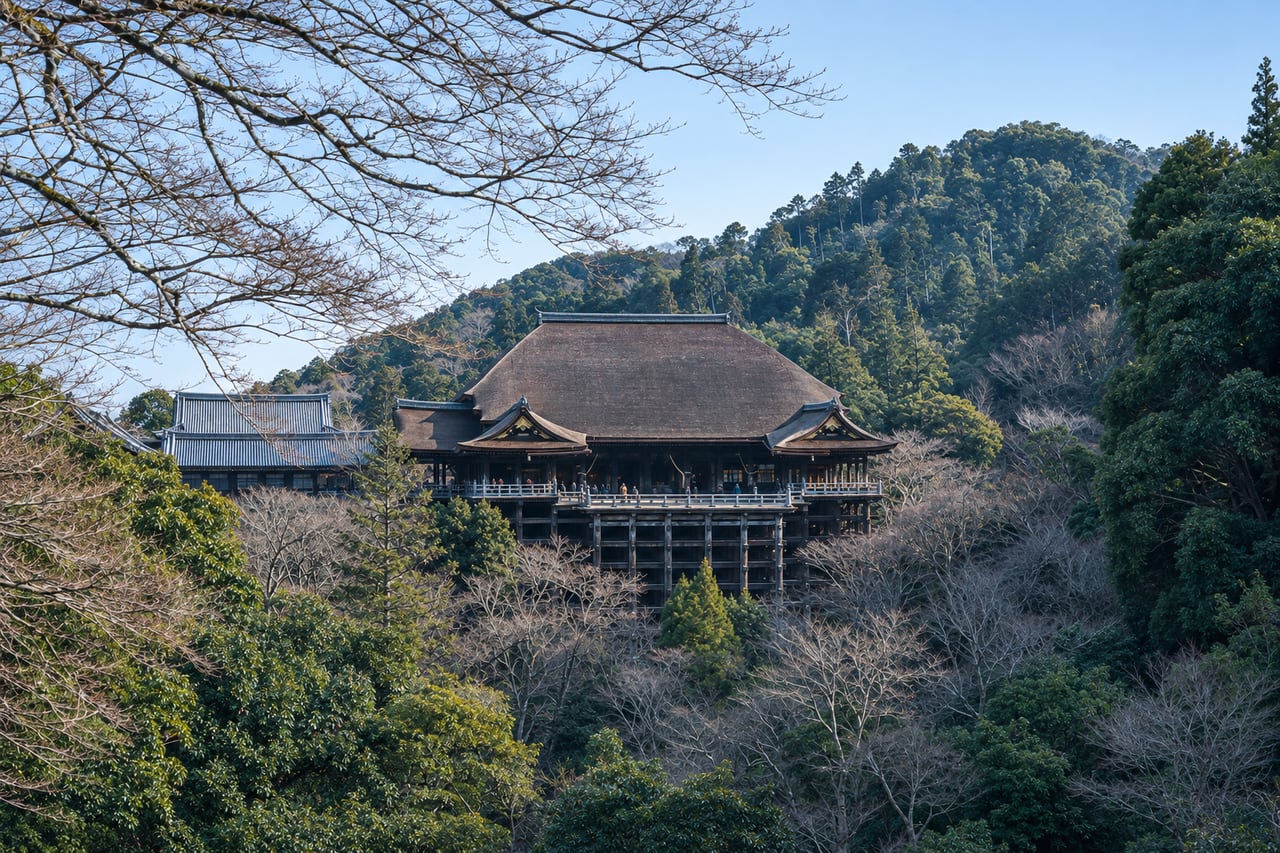
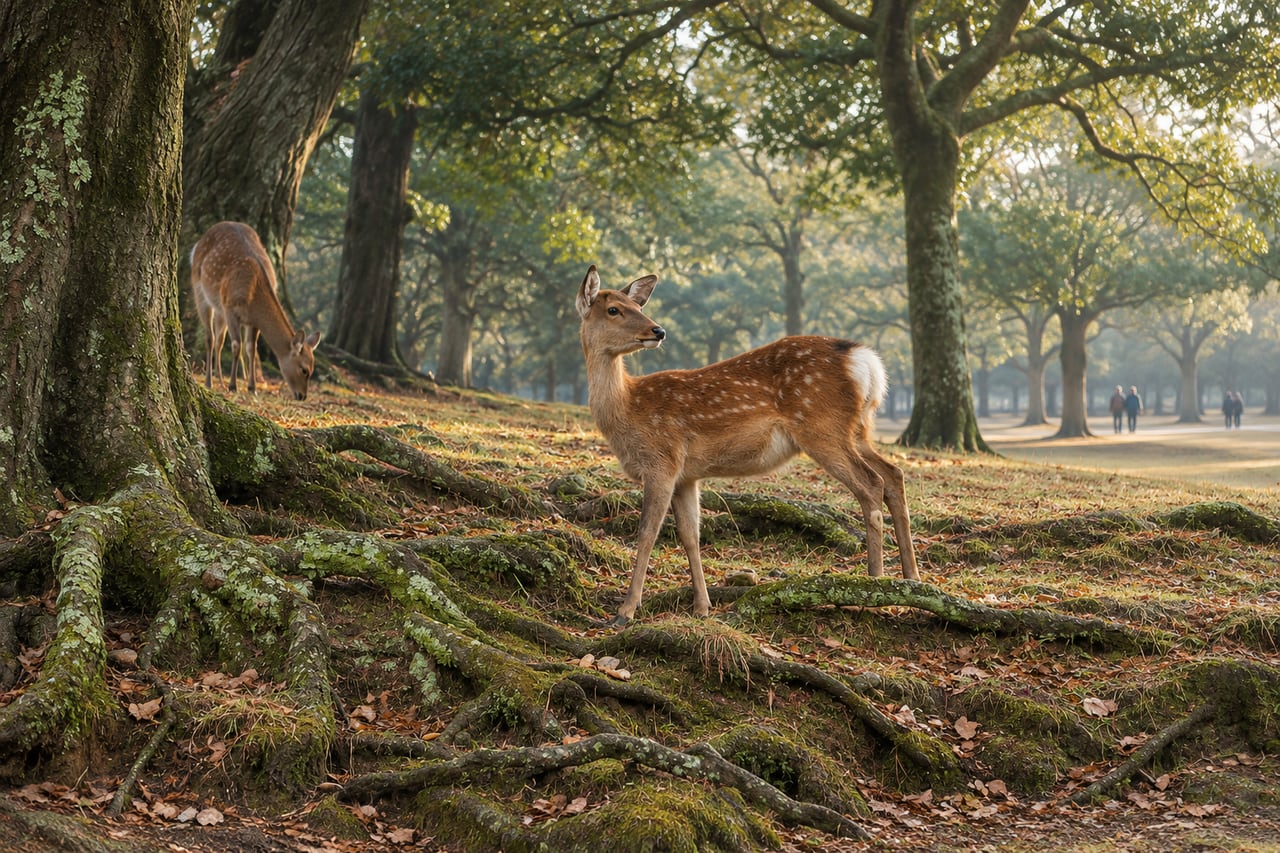
Days 1–4: use the four-night plan through the gentle post-race day. Day 5 / R+2: choose one excursion. Kyoto suits a temple-and-neighbourhood day; Nara suits a park-and-heritage outing. Pick a limited area and allow time to sit down. Day 6 / R+3: depart.
Neither city needs to become a dawn-to-night tour. In Kyoto, one district is a better starting point than crossing the city repeatedly. In Nara, park and temple visits still involve walking, so shorten the outing if needed. The JNTO guide to Osaka, Kyoto and Nara offers destination ideas; our placement of the trip after the race is an editorial choice.
Seven nights: a Kansai holiday with a race in the middle
Day 1 / R−3: arrive. Day 2 / R−2: take a modest city outing and sort out practical needs. Day 3 / R−1: simplify the day and prepare. Day 4 / R: race. Day 5 / R+1: recover and enjoy a nearby meal. Day 6 / R+2: visit Kyoto. Day 7 / R+3: choose Nara, another Osaka neighbourhood, or a rest day. Day 8 / R+4: depart.
For long-haul visitors, adding days before the race may be more valuable than another excursion afterwards. The schedule is a travel template, not a guarantee that a particular number of nights will resolve jet lag. Adjust it to how you usually respond to travel and keep optional bookings changeable.
5. What to see without exhausting your legs
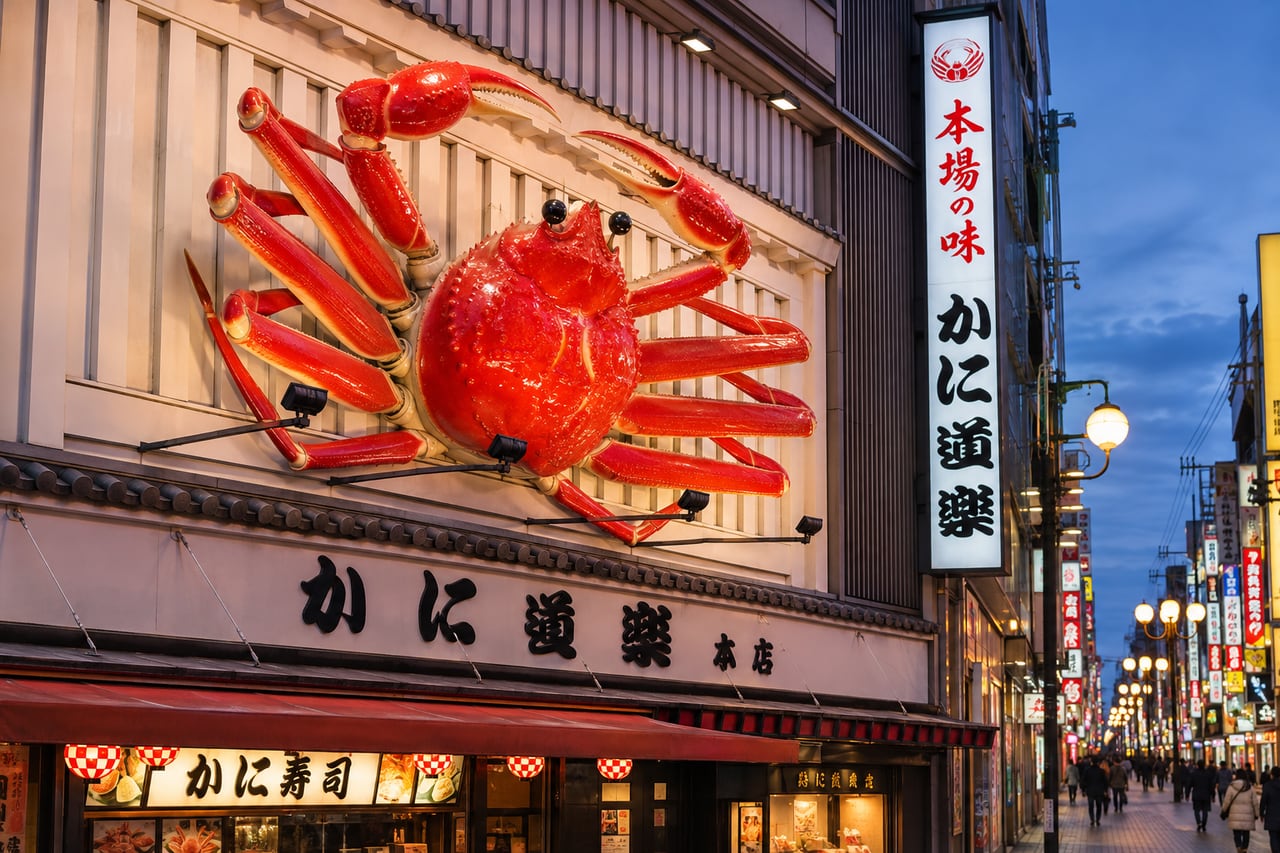
Dotonbori and the Namba area: good for a short introduction to Osaka’s food culture and bright evening streets. Choose a meeting point before the group splits up. A crowded restaurant queue is still time on your feet; if your goal is an early meal before racing, use a simpler nearby option and return for the famous dishes afterwards.
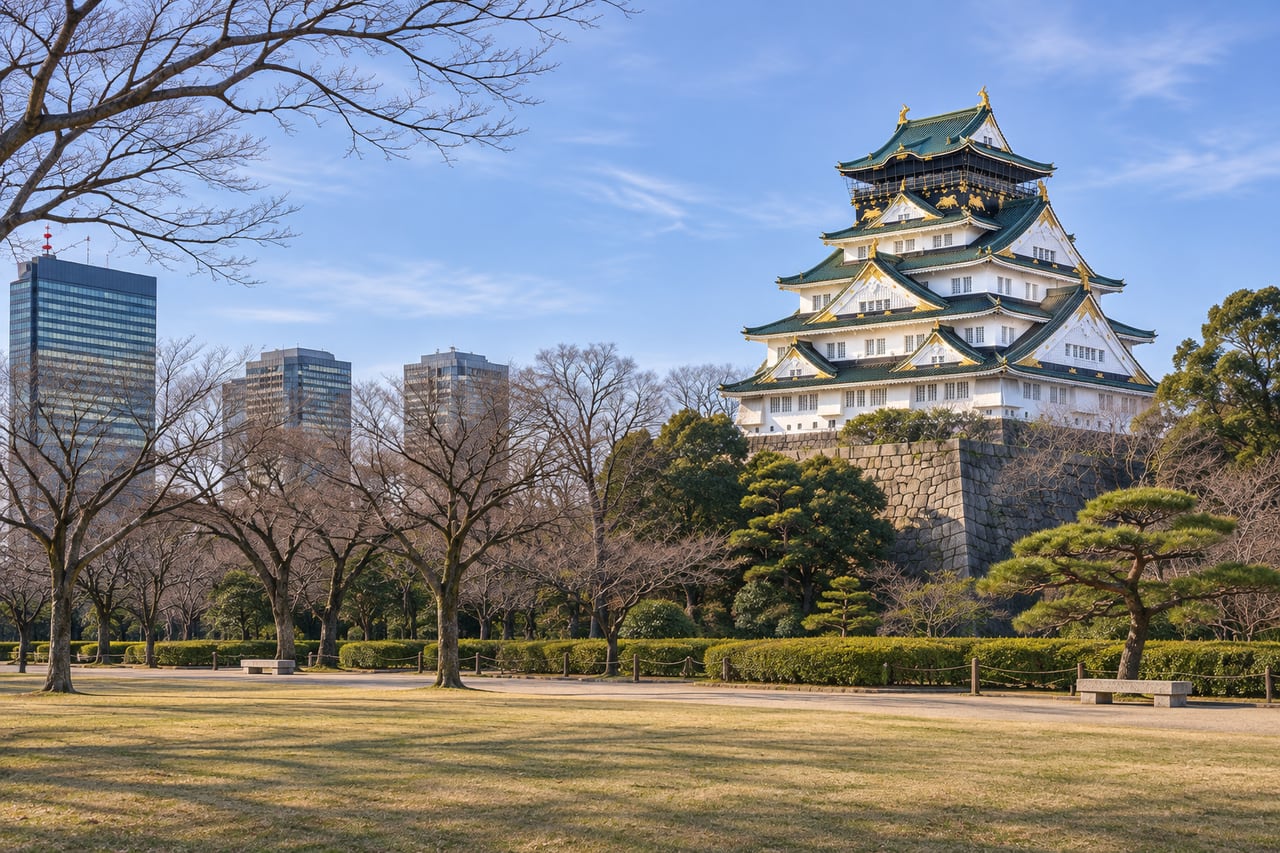
Osaka Castle Park: a useful choice for a city outing, but a large park visit can accumulate more walking than expected. Decide whether you want a short exterior-and-park visit or a longer museum visit, and check opening information before setting off. See the official Osaka tourism guide for current attraction information.
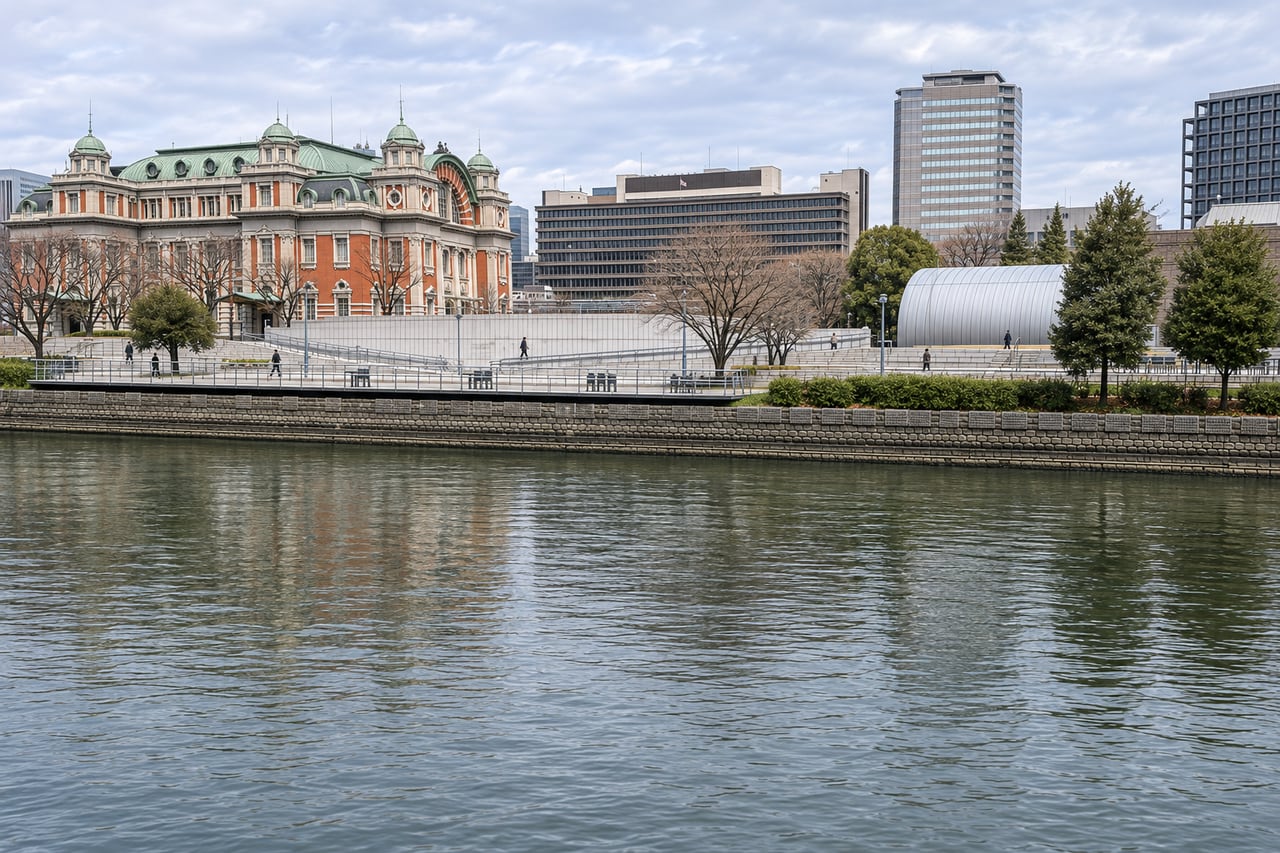
Nakanoshima: a central riverside alternative with cultural buildings and places to pause. Plan a short section of the area rather than a long end-to-end walk. The official Nakanoshima introduction is useful for choosing a starting point.
A full theme-park day: if it is a highlight of your holiday, give it a separate day after the race and confirm tickets with the operator. Expect queues and a considerable amount of walking. It should not be squeezed into the afternoon before HYROX simply because both activities are in Osaka.
January is winter in Osaka. Pack warm layers for outdoor transfers and a dry change of clothes for after the race. The indoor race environment and the waterfront journey are different conditions. Check the forecast close to departure rather than packing from a generic picture of Japan; JNTO’s seasonal planning guide gives the broader context.
6. Osaka food: what the names mean and when to try it
Eating is part of the appeal of an Osaka trip. You do not need to understand every menu before arriving, but knowing a few dish names helps you choose. The descriptions below identify common versions, not a promise about the ingredients in any particular restaurant.
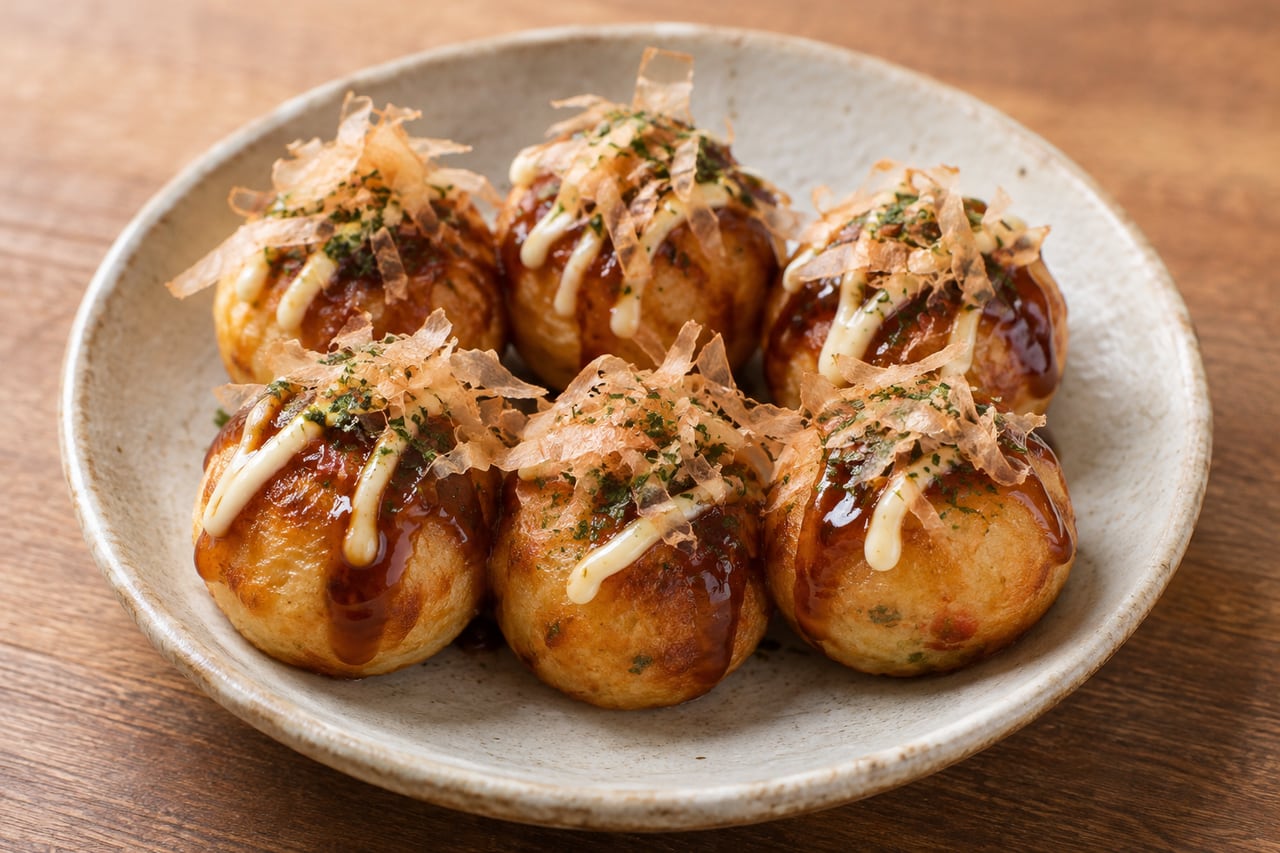
Takoyaki
Round, savoury batter balls with octopus, often topped with sauce and bonito flakes.
Let the hot centre cool. Ask about toppings and ingredients if you have dietary restrictions.
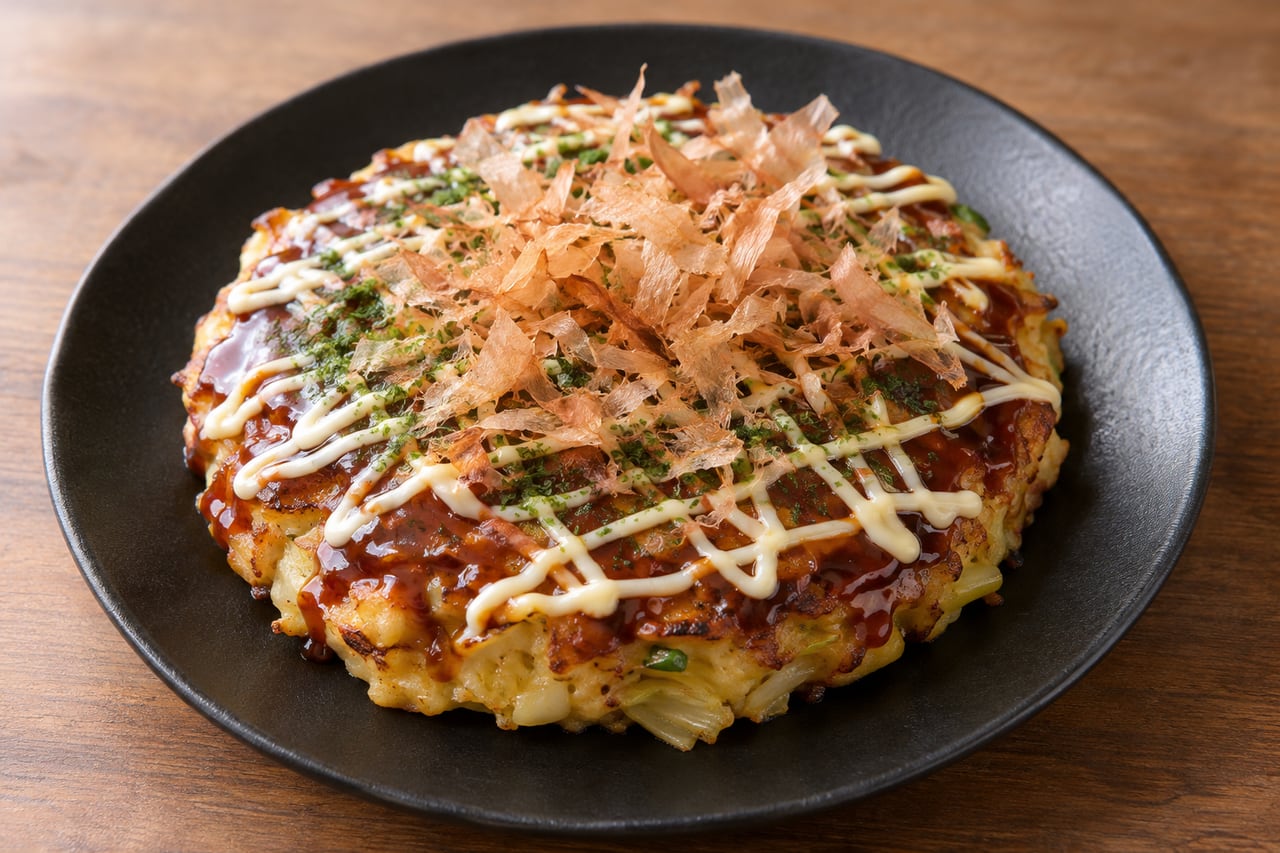
Okonomiyaki
A griddled cabbage-based savoury pancake, with fillings such as pork or seafood.
The name alone does not tell you whether the batter or toppings contain fish products.
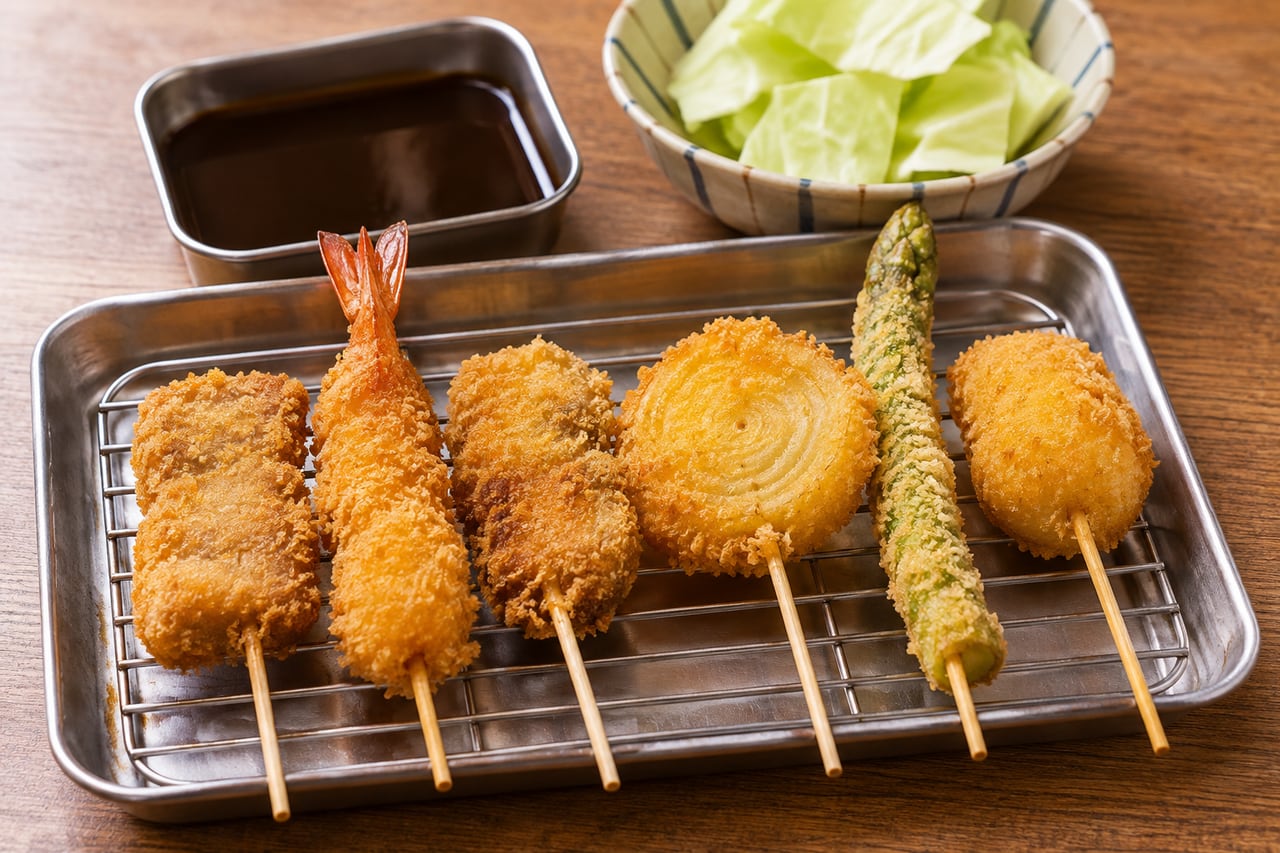
Kushikatsu
Breaded, deep-fried skewers; ingredients vary from vegetables to meat and seafood.
Confirm the item and follow that restaurant’s sauce instructions.
Dish background: Osaka’s official food guide. These foods can make an enjoyable post-race meal. Before racing, prioritise meals and portions you already know suit you; a race trip is not the best moment to discover how you tolerate a large fried meal.
Everyday Japanese food that is useful to recognise
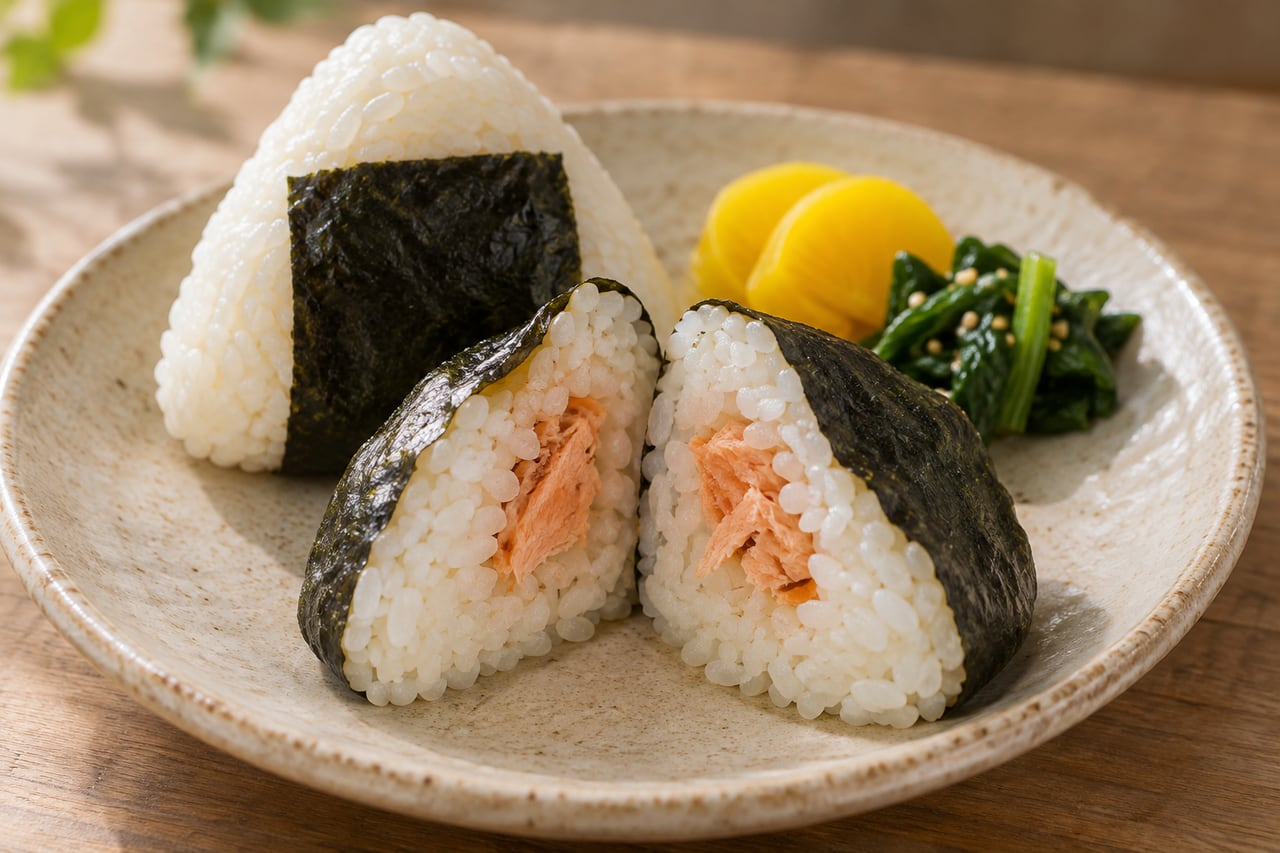
Onigiri
rice balls, often wrapped in seaweed and containing a filling. The outside does not identify the filling; look for a label or ask.
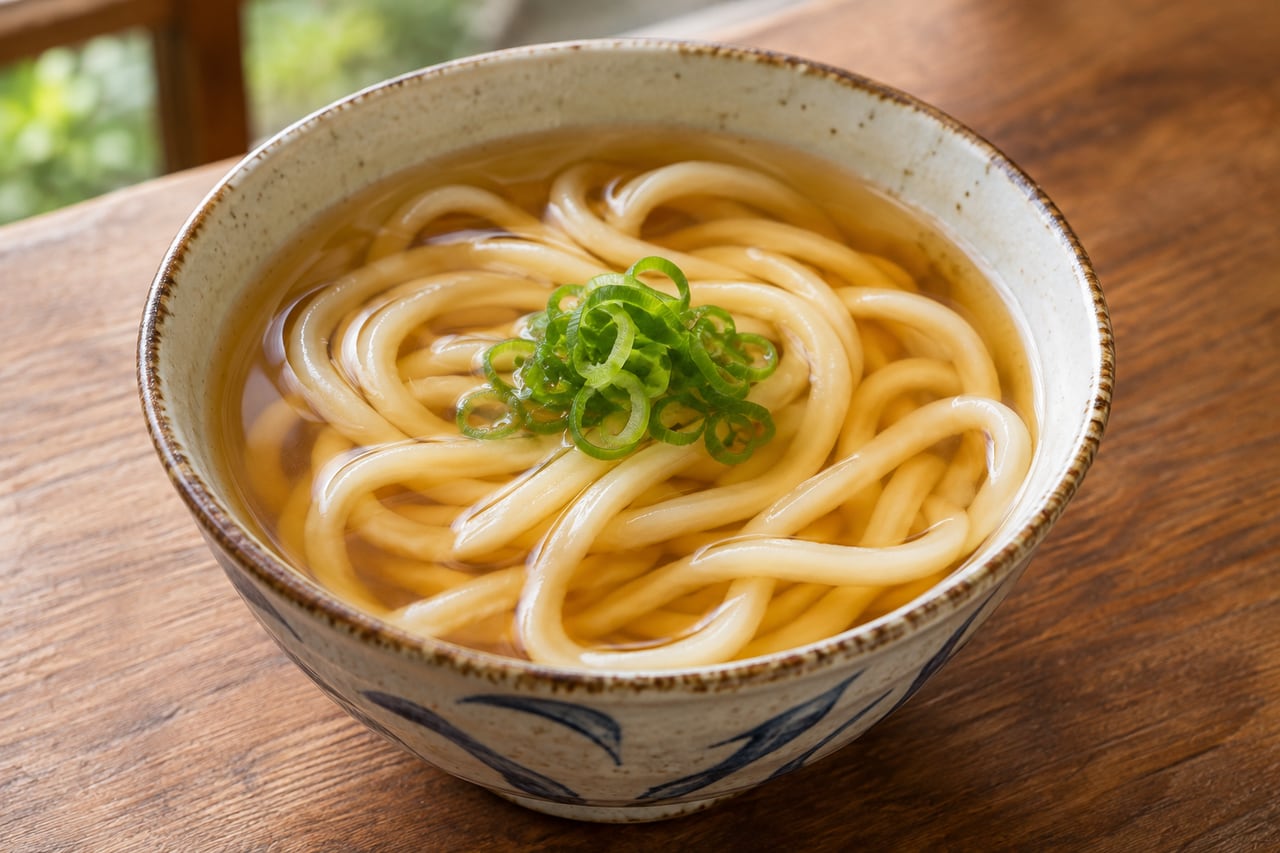
Udon
thick wheat noodles. A simple-looking bowl may still have fish-based stock, egg or other ingredients.
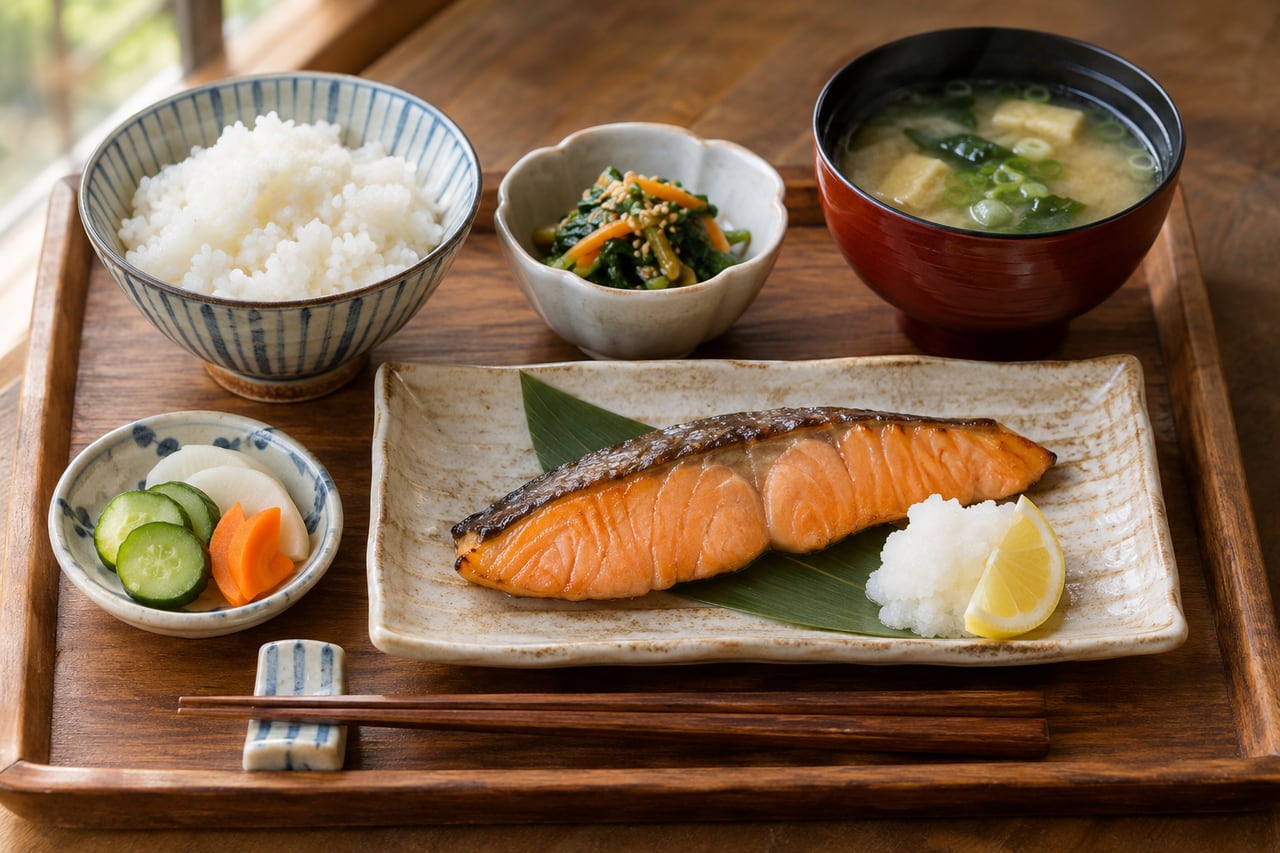
Teishoku
a set meal, commonly organised around a main dish with rice and accompaniments. Check the actual menu rather than assuming every set has the same components.

Donburi
a bowl of rice with a topping. The topping and sauce determine what you are eating; “rice bowl” is not an ingredient description.
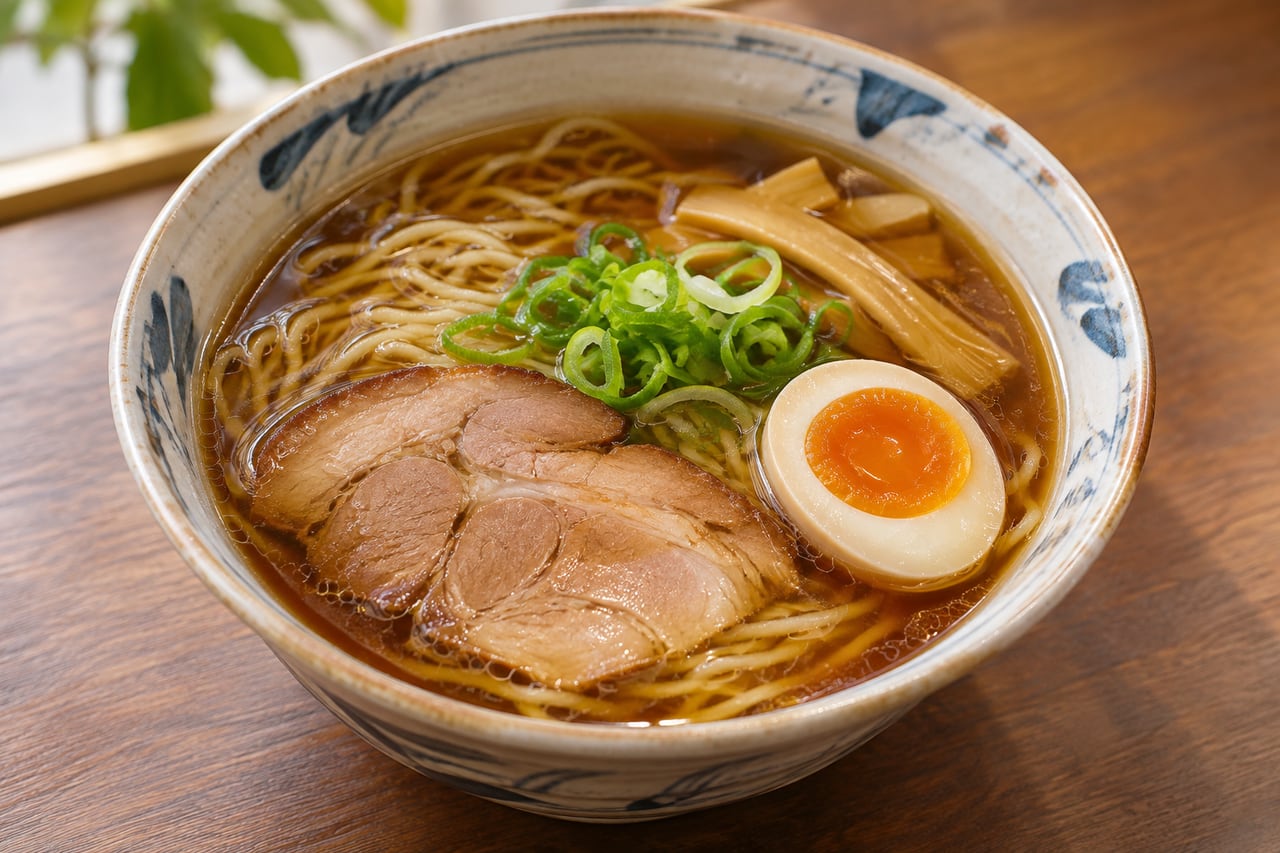
Ramen
noodles with broth and toppings. Broth can contain pork, chicken or fish even when pieces of those ingredients are not visible.
For race morning, buy what you need the previous evening if the hotel breakfast begins too late. A familiar meal, water and enough unhurried time are more useful than trying to find a supposedly perfect local “race breakfast”. Do not make a major change to your usual fuelling routine just because a food appears in this guide.
Vegetarian, vegan, halal and allergy requirements
A vegetable dish is not necessarily vegetarian: stock and sauces may contain fish or other animal ingredients. Explain the restriction clearly and ask about preparation, not only the visible topping. The JNTO vegetarian and vegan guide explains why dashi, the stock used in many dishes, needs attention. Halal suitability also needs to be confirmed with the restaurant; do not infer it simply because a dish has no visible pork.
For food allergies, prepare a clear written explanation and discuss ingredients and cross-contact with staff. Japan’s Consumer Affairs Agency provides an English/Japanese food-allergy communication sheet. A translation app or this article cannot confirm that a particular meal is safe for you.
7. A practical checklist for overseas visitors
Before departure
- Entry requirements: check the rules for your passport and trip with the relevant Japanese authorities. JNTO’s visa information is a useful starting point. A HYROX ticket is not an entry permit.
- Arrival procedures: the official Visit Japan Web service can be used for applicable arrival procedures; it does not replace a visa when one is required.
- Race documents: save your entry confirmation, participant details, ID requirements and the event-page link where you can find them offline.
- Phone and payment: arrange connectivity, a compatible charger and more than one practical way to pay. Keep a backup copy of important addresses in Japanese.
- Travel cover: check your own policy’s terms for an organised fitness race rather than assuming a general holiday policy covers it.
- Essential kit: where your airline permits, keep race shoes and indispensable personal items with you instead of putting everything in checked luggage.
The day before the race
Write a short plan with four times: breakfast, leave hotel, arrive at the venue, and your start. Build in the actual check-in instructions once published. Test the route from your hotel entrance to the correct station entrance. Pack dry clothes, confirm how the group will contact each other, and decide where to meet afterwards. If you have time for sightseeing, keep it close and optional.
How to budget for the trip
Build the budget from your real bookings: race entry and optional extras; flights or long-distance rail; room cost multiplied by nights; airport and local transfers; food; sightseeing; and a contingency. A shared room and a solo room produce very different per-person totals. Compare live quotes for your dates. Compare a convenient hotel’s total trip cost with a cheaper room that adds transfers or late-night taxi travel.
Travelling with a partner or children
Give supporters a plan that does not depend on watching every minute of your race. Agree who carries the shared belongings, where to meet, and whether a child needs a break away from the hall. Check spectator admission for each person. A family outing the next day should be optional if the athlete needs a slower start.
8. Questions overseas athletes ask
Is HYROX Osaka at Osaka Castle or in central Osaka?
No. The announced venue is INTEX Osaka in the Nanko waterfront area. Treat sightseeing in central Osaka and travel to the venue as separate journeys.
How many nights should I book?
Our starting suggestion is four nights, with two nights before racing and two from race night onwards. Two nights can work for a compact visit, but provides little margin. Long-haul travel or a larger holiday may justify more time.
Can I fly out on race night?
Do not plan around that until you know your own start time and have allowed for the race, changing, the transfer and airline check-in. A night in Osaka after racing is the more flexible option.
Can I visit Kyoto and Nara on the same day?
It is better to choose one for an unhurried excursion after HYROX. Seeing both is more sensible with separate days, especially if you are sore or travelling with family.
Should I book Nagoya as a second race on the same holiday?
The 2027 Nagoya event is in April, while Osaka is in January. They are separate race trips, not consecutive weekends. Our Nagoya feature is useful if you are deciding which season and city better suit your plans.
Will this guide replace the athlete briefing?
No. Use the organiser’s final instructions for your race. This feature helps you plan the travel around them.
Sources and further reading
Event and travel links were reviewed on 14 November 2026. Provisional race information can change. Suggested hotel areas and itineraries are ROXNOW editorial recommendations; no hotel or restaurant stay was booked or reviewed for this feature.
Bring your training record to Japan with HYTRAX
Keep HYROX, running and strength sessions together in the HYTRAX iOS and Android apps. Record distance, repetitions, weight and time; review your progress; and share a training result over your own photo.
Use your training history to look back on the preparation that brought you to Japan, then keep recording towards your next race.
Download for iPhone · App Store ↗Get it for Android · Google Play ↗

ROXNOW編集部
ROXNOW編集部が公式資料等を確認し、独自に整理・執筆しています。